
Industries We Serve
Hood & Exhaust Cleaning for Food Trucks
A small system with a big fire risk — your fryer sits inches from the hood. We clean it and document it for permits and insurance.
Call now — talk to a real person(555) 555-0123Why trucks build grease faster
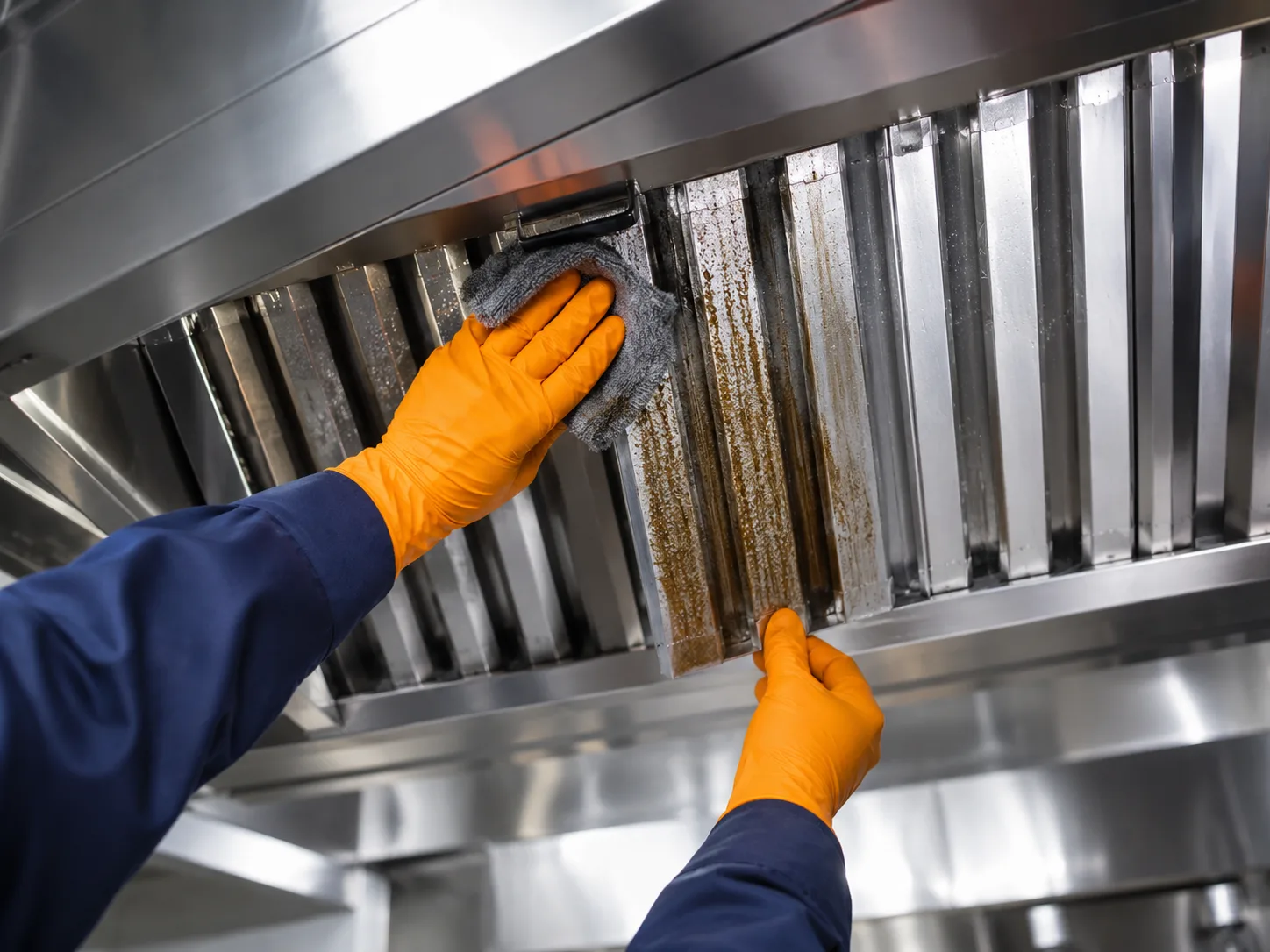
Scale a restaurant exhaust system down into a truck and every distance shrinks except the fire risk. The fryer sits inches below the hood. The duct run is a few feet, not a few storeys — grease that would condense along a long duct in a building lands concentrated in one short section. And the whole system spends its life on the road, where vibration works baffle filters loose and shakes hardened buildup free exactly where you don't want it.
Add the way trucks actually cook — fryers and flat-tops running hard through a short service window — and a mobile kitchen can load its exhaust with grease faster than a full-size restaurant line. Small system, short distances, heavy output: that's why truck fires escalate so fast, and why the cleaning schedule matters more here, not less.
NFPA 96 and mobile units
NFPA 96 covers commercial cooking operations that produce grease-laden vapors — and your fryer doesn't care that the kitchen has wheels. Given how hard most trucks cook, the quarterly high-volume tier is the realistic starting point for a working truck, not the semi-annual schedule a typical sit-down kitchen runs.
Your AHJ, commissary, or permit office may layer its own requirement on top of the standard, and inspection findings can move you up a tier. If you're not sure where your rig lands, the high-volume cleaning frequency guide breaks the tiers down — or describe your cooking line when you request a quote and we'll tell you where it sits.
Booking built for an owner-operator's week
- 1Tell us about your rigHood size, what's on the cooking line, and roughly when it was last cleaned. A few minutes by phone or through the form on this page.
- 2Pick a window that doesn't cost you a serviceEarly morning, overnight, or your day off — at your commissary or lot, wherever the truck parks. We come to the truck.
- 3We clean, photograph, and hand over the paperworkHood, filters, duct, and fan degreased to the NFPA 96 standard, with before-and-after photos and a service report you can show at renewal.
Permit and insurance documentation
For a mobile vendor, the paperwork is half the point. Every cleaning ends with a dated service report describing exactly what was cleaned, before-and-after photos taken inside the system, and a certificate recording that the work was performed to the NFPA 96 standard with the next service due date. Keep them in the truck's file — when renewal comes around or an insurer asks for proof of maintenance, you hand over records instead of receipts.
Budgeting for the year? Our guide to what it costs covers typical industry ranges and what actually moves the price for a compact system like yours. If your fan is caked or the truck has sat between owners, start with exhaust fan cleaning and a full-system reset.
FAQ
Common Questions
What food trucks operators ask us before booking.
Get a Free Quote for Your Facility
Tell us what you run and when we can get in. We come back with a clear scope, a schedule that fits your hours, and the documentation plan to match.
Prefer to call?(555) 555-0123Documentation available with your quote.