
HVAC Services
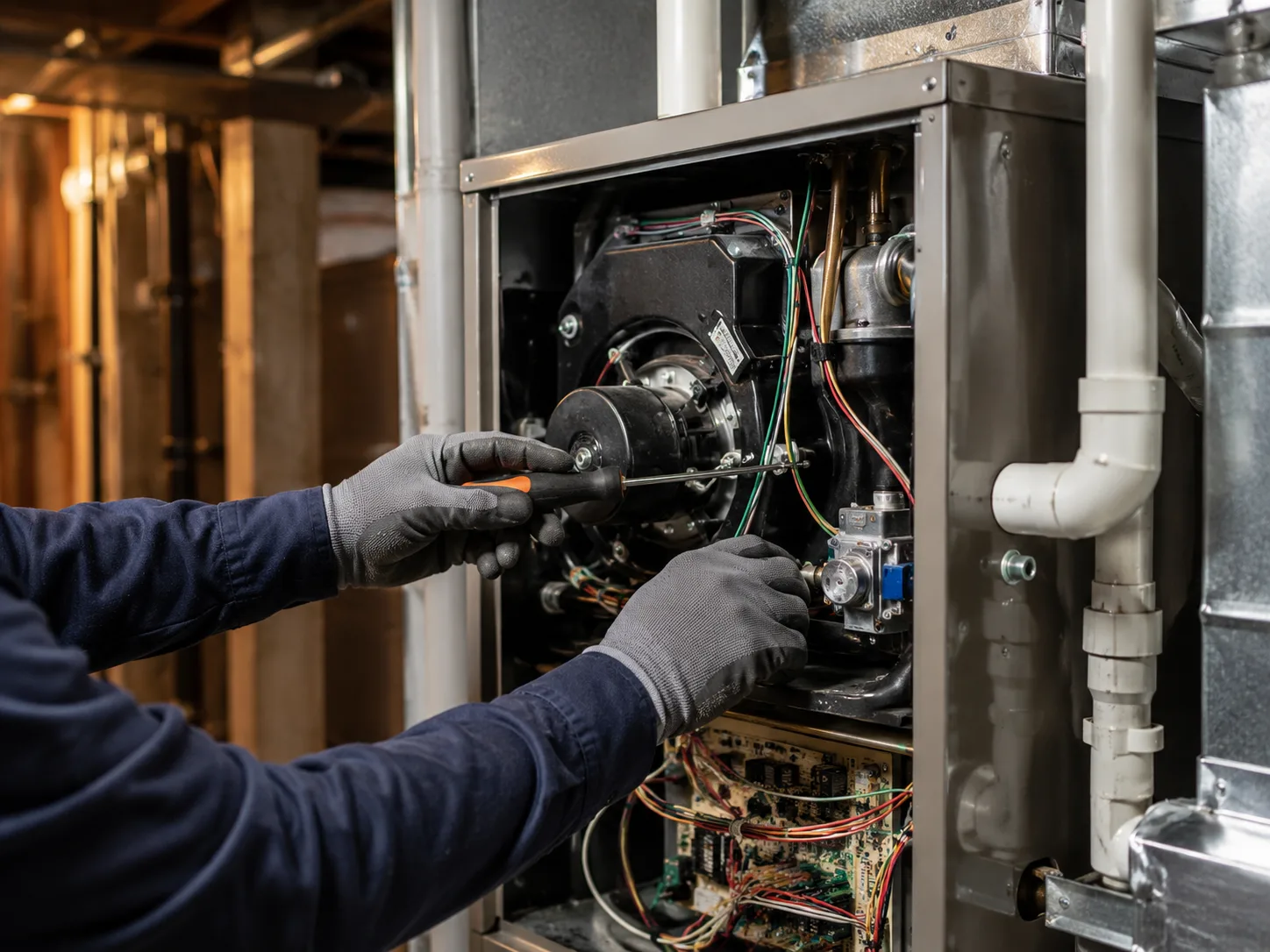
Furnace Repair
No heat when it's cold out? We diagnose the fault and quote the repair upfront — before any work begins. Smell gas? Leave first and call your gas utility or 911.
Call now — talk to a real person(555) 555-0123Common furnace problems we fix
- No heat at allA dead thermostat, tripped safety switch, failed igniter, or a gas-supply fault — we trace it to the actual cause instead of guessing at parts.
- Blowing cold airOften an ignition or flame-sensor fault that lets the blower run while the burner stays off. Sometimes it's just a thermostat fan setting — and we'll tell you if it's that simple.
- Short cyclingA furnace that fires up and quits minutes later is usually overheating or reading a dirty flame sensor. Left alone, it chews through parts and drives your bill up.
- Ignition failureClicking with no flame points to the igniter, gas valve, or control board. We test the sequence step by step rather than swapping parts and hoping.
- Noisy operationBangs, squeals, and rattles each map to specific failures — delayed ignition, blower bearings, loose panels. The noise usually names the fix.
Safety first: gas and carbon monoxide
If you smell gas, leave the building first — then call your gas utility's emergency line or 911. Don't flip switches, don't light anything, and don't stay inside to make the call. A contractor comes after the utility has made the scene safe, never before. That order isn't negotiable, and any technician worth hiring will tell you the same thing.
Carbon monoxide is the quieter risk. A cracked heat exchanger or a blocked vent can push CO into your home with no smell to warn you, which is why working CO alarms on every level matter more than any tune-up. If a CO alarm sounds, get everyone outside and call 911 before anything else.
This is also why every furnace repair we finish ends with a safety check. We verify ignition, combustion, and venting before we close the panel — because your furnace runs while you sleep.
How a repair visit works
- 1
Diagnose
The technician tests the system end to end — thermostat call, ignition sequence, flame sensing, blower, venting — and shows you exactly what failed.
- 2
Upfront quote
You get the full price in writing before any work starts. Approve it, and that's what you pay. Nothing begins on a maybe.
- 3
Repair
Common failures — igniters, flame sensors, capacitors, motors — are often fixed on the spot when the part is on the truck. If it isn't, you'll know exactly when we'll be back.
- 4
Safety check
We run a full heat cycle, verify combustion and venting are safe, and walk you through what we found and what we fixed.
Repair an aging furnace, or replace it?
There's a point where another repair is money spent on a furnace that's on its way out. The honest math weighs three things: the age of the unit, the size of this repair, and what the last few winters of repairs have already cost you. A failed igniter on a furnace midway through its life is an easy yes. A major component on a unit near the end of its run deserves a harder conversation.
When it's close, we'll give you both numbers — the repair quote and what a replacement would look like — and let you decide without pressure. If you'd rather read up before we arrive, start with the signs you need a new furnace.
No heat in the middle of the night?
Cold snaps don't wait for business hours. Our emergency line answers 24/7 — call, and we'll triage your no-heat on the phone before a truck even rolls.
FAQ
Common Questions
Ready to Book Furnace Repair?
Tell us what you need and we'll get back to you fast. Quotes are always free.
Prefer to call?(555) 555-0123Mon–Sun: 7:00 AM – 9:00 PM • Emergency service available 24/7
Documentation available with your quote.