
Industries We Serve
Hood Cleaning for Grocery Stores & Supermarkets
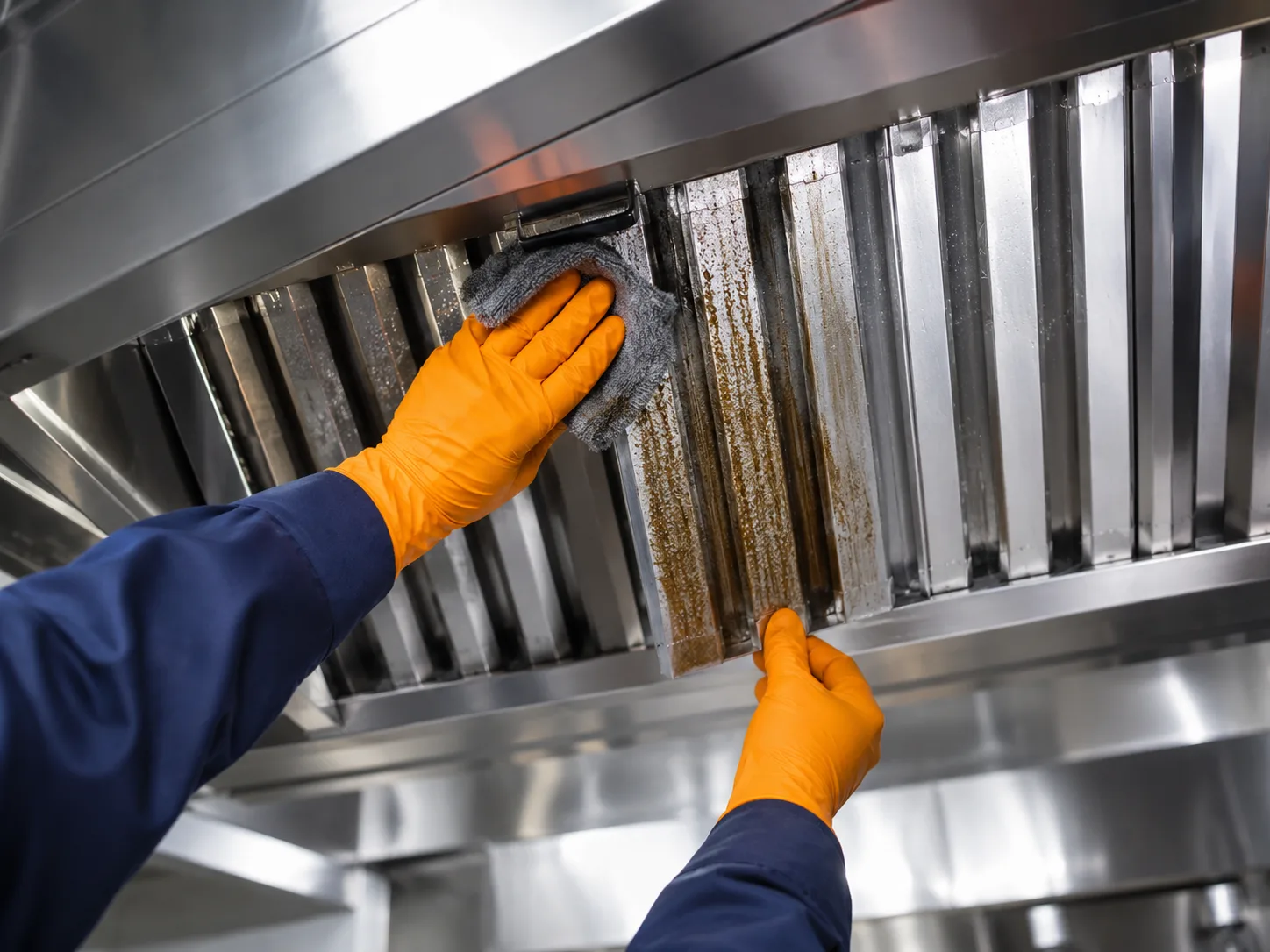
In-store cooking means restaurant-grade fire-code obligations. Deli, rotisserie, hot-bar, and bakery exhaust — cleaned overnight, documented in full.
Call now — talk to a real person(555) 555-0123A restaurant's fire code, inside a retail store
The moment a store fries chicken or runs a rotisserie, part of the building becomes a commercial kitchen in the eyes of the fire code. NFPA 96 doesn't distinguish between a restaurant and a retail floor — it applies wherever cooking produces grease-laden vapors. The difference is that in a supermarket, the cooking happens behind a service counter in a building full of shoppers, stock, and merchandise the exhaust system was never meant to put at risk.
That's the case for treating the deli exhaust with the same seriousness a restaurant gives its hood line — and for documentation that proves it, store by store.
Where grease hides in a supermarket
- Deli fryersChicken and fry programs load the exhaust as hard as any restaurant line — daily use puts most deli fryers in the higher-frequency NFPA 96 tiers.
- Rotisserie ovensContinuous cooking with heavy fat render. Wood- or charcoal-assisted rotisseries count as solid-fuel cooking under NFPA 96 — that's the monthly cleaning tier.
- Hot-bar and grill linesSteady output across the whole trading day coats hoods and ducts faster than a single dinner rush would.
- Bakery exhaustLower grease load than the deli, but bakery ventilation still needs to be clean and working — and it shares the same compliance paper trail.
NFPA 96 cleaning frequency by cooking volume
| Cooking operation | Required cleaning frequency |
|---|---|
| Solid-fuel cookingWood- or charcoal-fired ovens, smokers, and char-broilers | Monthly |
| High-volume cooking24-hour kitchens, charbroiling, and wok cooking | Quarterly |
| Moderate-volume cookingMost full-service restaurant kitchens | Semi-annually |
| Low-volume cookingChurches, day camps, seasonal kitchens, and senior centers | Annually |
Frequencies are set by NFPA 96, the standard for ventilation control and fire protection of commercial cooking operations. Your local fire authority (AHJ) can require more frequent cleaning — when in doubt, follow the stricter schedule. See the full NFPA 96 cleaning frequency guide for tier-by-tier examples.
Overnight cleaning around stocking crews
Supermarkets don't really close — they switch crews. We schedule hood and exhaust cleaning in the overnight window and coordinate with your night manager so stocking, floor care, and our work never compete for the same space. The zone around the deli and prep areas is contained and signed, nearby cases and product are protected, and aisles stay clear for pallets.
By opening, the system is degreased, rinsed, and dried, and the morning deli shift starts on a line that's ready to cook.
Multi-store programs, one paper trail
If you run a banner or a group of stores, the hard part of exhaust compliance isn't the cleaning — it's knowing every site is on schedule without phoning each store manager. We run multi-store programs on one consolidated calendar: each location is cleaned on the tier its cooking program requires, every visit produces a per-store report with photos and a certificate, and the whole set rolls up to one contact on your side.
It's the same model our multi-site programs page describes for property portfolios — one vendor, every site, a complete file for each.
Comfort and ventilation — not refrigeration
On the HVAC side, we service what keeps the store comfortable and the cooking areas breathing: rooftop units, sales-floor heating and cooling, and the ventilation and makeup air the deli depends on. To be direct about scope: we do not service commercial refrigeration — your cases, walk-ins, and rack systems stay with your refrigeration contractor.
Where we earn our keep is the cooking program: the hood cleaning service that keeps it compliant, and heavy grease removal when a neglected fryer exhaust needs a full reset before it can hold a normal schedule.
FAQ
Common Questions
What grocery & supermarkets operators ask us before booking.
Get a Free Quote for Your Facility
Tell us what you run and when we can get in. We come back with a clear scope, a schedule that fits your hours, and the documentation plan to match.
Prefer to call?(555) 555-0123Documentation available with your quote.