
Industries We Serve
Hood Cleaning & HVAC for Restaurants
Pass inspection, protect the line, and keep the dining room comfortable — one vendor for your exhaust system and your HVAC.
Call now — talk to a real person(555) 555-0123The restaurant compliance picture
NFPA 96 doesn't care about your concept. It classifies your exhaust system by what comes off the line: solid fuel means monthly cleaning, charbroilers and woks push you into quarterly, and most full-service kitchens land at semi-annual. The schedule is set by cooking volume, not by how the kitchen looks — a hood can read clean at eye level while the duct above it carries a grease load you'd never serve under if you could see it.
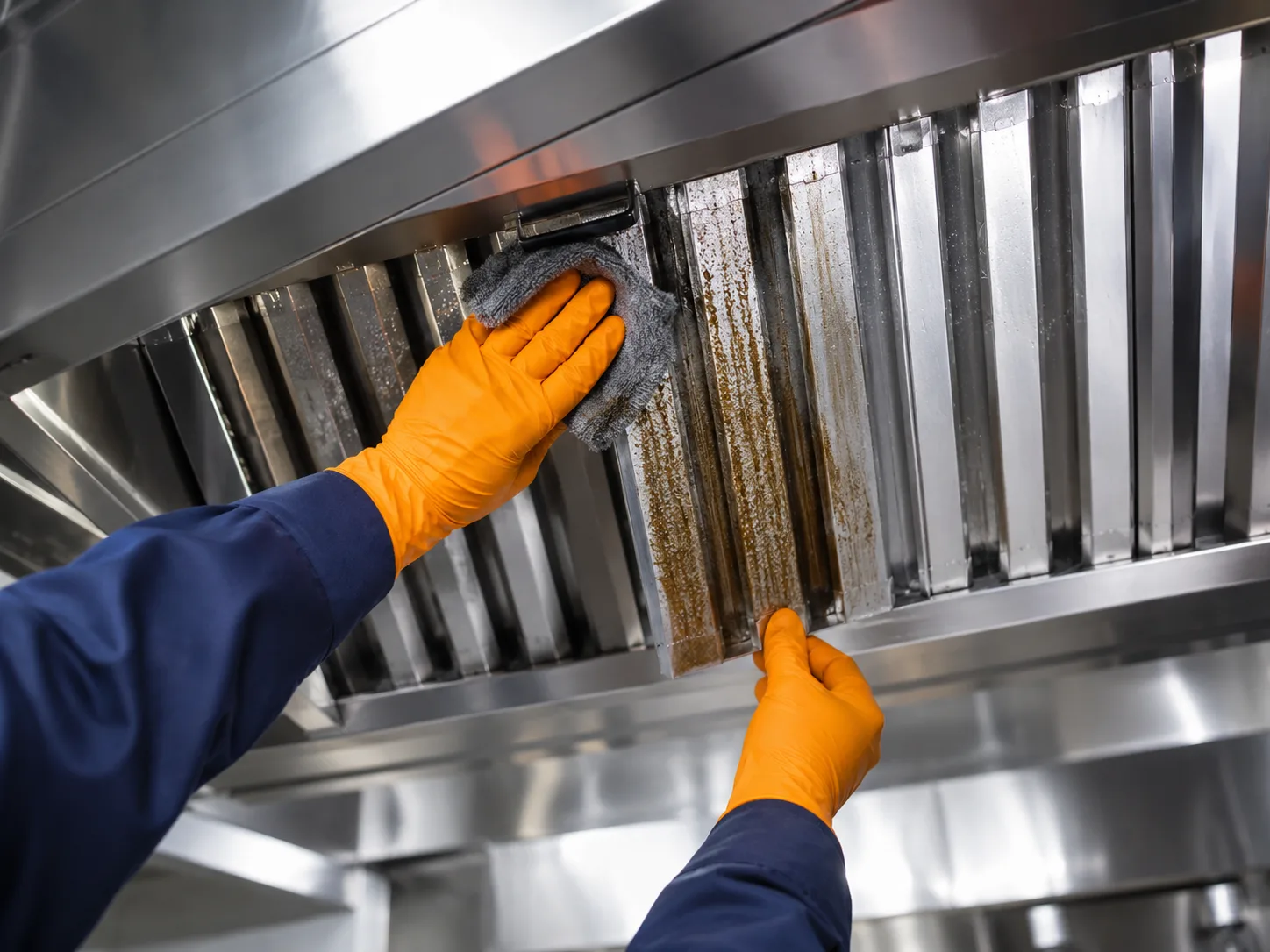
Two parties hold you to that schedule. The fire inspector checks the system and the paperwork. Your insurer checks the paperwork after something goes wrong — and a missed cleaning cycle is exactly the kind of gap a claims adjuster looks for. Our commercial hood cleaning service is built around keeping both satisfied: the right frequency for your cooking volume, and a record that proves it.
Not sure which tier you're in? Start with the cleaning frequency requirements guide, or have us confirm the classification during your first visit.
NFPA 96 cleaning frequency by cooking volume
| Cooking operation | Required cleaning frequency |
|---|---|
| Solid-fuel cookingWood- or charcoal-fired ovens, smokers, and char-broilers | Monthly |
| High-volume cooking24-hour kitchens, charbroiling, and wok cooking | Quarterly |
| Moderate-volume cookingMost full-service restaurant kitchens | Semi-annually |
| Low-volume cookingChurches, day camps, seasonal kitchens, and senior centers | Annually |
Frequencies are set by NFPA 96, the standard for ventilation control and fire protection of commercial cooking operations. Your local fire authority (AHJ) can require more frequent cleaning — when in doubt, follow the stricter schedule. See the full NFPA 96 cleaning frequency guide for tier-by-tier examples.
Overnight and off-hours scheduling
Hood cleaning that costs you a dinner service isn't a deal — it's a second bill. We schedule restaurant work for the hours your kitchen is dark: after close, overnight, or in the gap before prep. The crew covers and protects cooking equipment, degreases the system from hood to fan, and leaves the line wiped down and ready for your opening shift.
You set the access plan once — keys, codes, alarm, or a closing manager handoff — and it carries over to every scheduled visit after that. Recurring cleanings land on the calendar at your required frequency, so staying compliant stops being something anyone at the restaurant has to remember.
Documentation you can hand the inspector
When the fire marshal walks in, the first question is simple: when was this system last cleaned, and by whom? The answer should be a document, not a guess. Every visit ends with a complete record of the exhaust system cleaning — what was cleaned, what it looked like before and after, and when the next service is due. If any section of duct couldn't be reached, the report says so plainly, because NFPA 96 requires inaccessible areas to be disclosed, not papered over.
Walk through the inspection checklist before your next visit from the marshal — most citations trace back to items on it.
What's in your compliance file after every visit
- Before-and-after photos of the hood, accessible ductwork, and exhaust fan
- A written service report listing every component cleaned — with any inaccessible areas disclosed, as NFPA 96 requires
- A certificate of performance showing the service date, the standard the work follows, and when the next cleaning is due
- A hood sticker placed on-site, so the date is visible the moment an inspector looks up
HVAC for dining rooms and kitchens
Your exhaust system and your HVAC are one airflow problem wearing two trade names. The hood pulls conditioned air out of the building all service long — without balanced makeup air, doors whistle, the dining room HVAC fights a losing battle, and the kitchen runs hot. We handle both sides: rooftop units and dining-room comfort, kitchen makeup air, and the ventilation in between.
One vendor for both trades means one account, one scheduling contact, and a tech who already knows your building when something fails on a Friday night. That's the case for restaurant HVAC service from the company that already cleans your exhaust system.
FAQ
Common Questions
What restaurants operators ask us before booking.
Get a Free Quote for Your Facility
Tell us what you run and when we can get in. We come back with a clear scope, a schedule that fits your hours, and the documentation plan to match.
Prefer to call?(555) 555-0123Documentation available with your quote.