
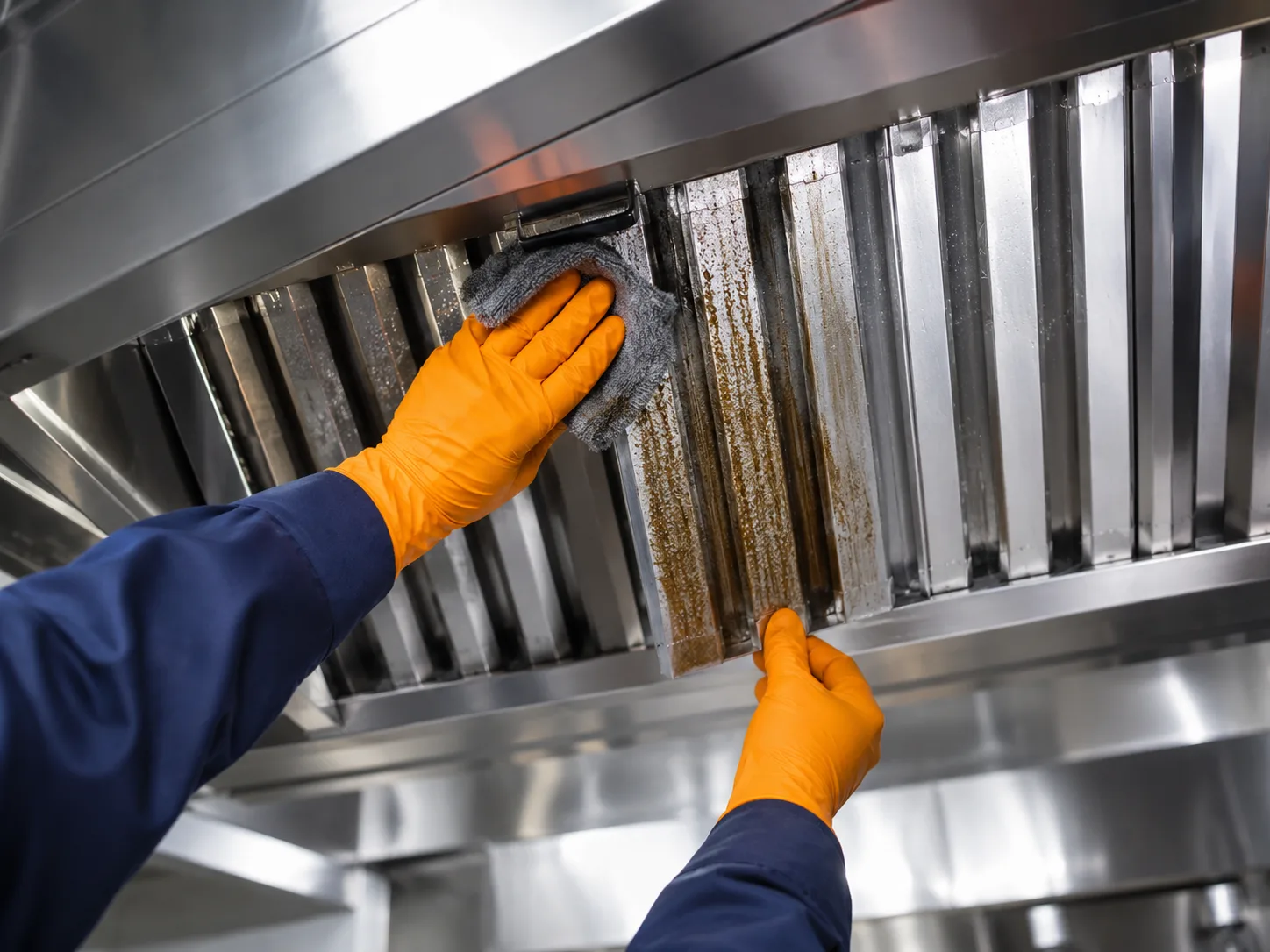
Hood & Exhaust Cleaning
Commercial & Restaurant Hood Cleaning
Bare-metal cleaning to the NFPA 96 standard — with before/after photos, a service sticker, and the documentation your inspector and insurer expect.
Call now — talk to a real person(555) 555-0123Why hood cleaning matters
Every hour your line runs, grease vapor rises off the cooking surface, cools, and condenses inside the hood, the filters, and the duct above them. That layer is fuel — sitting directly over open flame, in the one part of the kitchen a handheld extinguisher can't reach. When a flare-up gets past the filters, the duct is what carries the fire through the building.
That's the problem NFPA 96 exists to solve. The standard — adopted into fire codes nearly everywhere commercial cooking happens — requires the exhaust system to be inspected on a fixed schedule and cleaned to bare metal when grease has accumulated, by people qualified to do the work. Your interval depends on cooking volume; see NFPA 96 cleaning frequency by cooking volume for where your kitchen lands.
Falling behind costs more than the cleaning. An inspector who finds buildup or a missing service sticker can write you up or shut the line down, and after a fire your insurer will ask for cleaning records — a thin file is a bad place to be. Every job we do closes that gap: bare-metal cleaning, before/after photos, and the paper trail itself — see certificate of performance explained for exactly what you should be handed after a cleaning.
What's included in every hood cleaning
- Hood canopy degreased to bare metal
- Filters removed and cleaned (or flagged for replacement)
- Plenum behind the filters scraped and degreased
- Accessible ductwork cleaned
- Exhaust fan degreased and inspected
- Stainless polished after cleaning
- Service sticker applied to the hood
- Before/after photo report with your documentation
How a cleaning visit runs
- 1
Inspect
We walk the whole system before anything gets wet — canopy, filters, plenum, duct access, fan — and photograph the starting condition so your report shows exactly what changed.
- 2
Protect the kitchen
Appliances and the cookline get wrapped in poly, floors covered, drains protected. Degreaser and grease runoff stay contained — your kitchen opens clean, not coated.
- 3
Clean to bare metal
Filters pulled and soaked, plenum and accessible duct scraped and degreased, canopy washed down to metal you can see. Polished stainless is the finish — not a substitute for the work underneath it.
- 4
Document & certify
A dated service sticker goes on the hood, and you get before/after photos plus a written report for your compliance file — what the inspector asks for and the insurer expects.
How often NFPA 96 requires cleaning
| Cooking operation | Required cleaning frequency |
|---|---|
| Solid-fuel cookingWood- or charcoal-fired ovens, smokers, and char-broilers | Monthly |
| High-volume cooking24-hour kitchens, charbroiling, and wok cooking | Quarterly |
| Moderate-volume cookingMost full-service restaurant kitchens | Semi-annually |
| Low-volume cookingChurches, day camps, seasonal kitchens, and senior centers | Annually |
Frequencies are set by NFPA 96, the standard for ventilation control and fire protection of commercial cooking operations. Your local fire authority (AHJ) can require more frequent cleaning — when in doubt, follow the stricter schedule. See the full NFPA 96 cleaning frequency guide for tier-by-tier examples.
Bare-metal cleaning vs. a surface wipe-down
| Proper bare-metal cleaning | Surface wipe-down |
|---|---|
| Hood, filters, and plenum degreased to bare metal | Visible stainless polished; baked-on grease left behind the filter line |
| Accessible duct and exhaust fan cleaned — the parts that carry a fire | Stops at the hood; duct and fan stay loaded |
| Before/after photos of every area cleaned | No photo record — you're taking their word for it |
| Service sticker and written report for inspectors and insurers | Nothing to show when the fire marshal asks for documentation |
FAQ
Common Questions
Ready to Book Commercial & Restaurant Hood Cleaning?
Tell us what you need and we'll get back to you fast. Quotes are always free.
Prefer to call?(555) 555-0123Mon–Sun: 7:00 AM – 9:00 PM • Emergency service available 24/7
Documentation available with your quote.